Vibe-Coding Experiments
The best product builders know how to execute technically. This is a collection of 0-to-1 experiments where I use vibe-coding and rapid prototyping to learn new technologies on the fly. By leveraging these tools, I can drastically increase my output and prototyping speed - turning raw ideas into functional, interactive products faster.
TOOLS
Claude Code, VS Code, Figma, AntiGravity
TIMELINE
Feb '26 - Present
TIMELINE
Feb '26 - Present
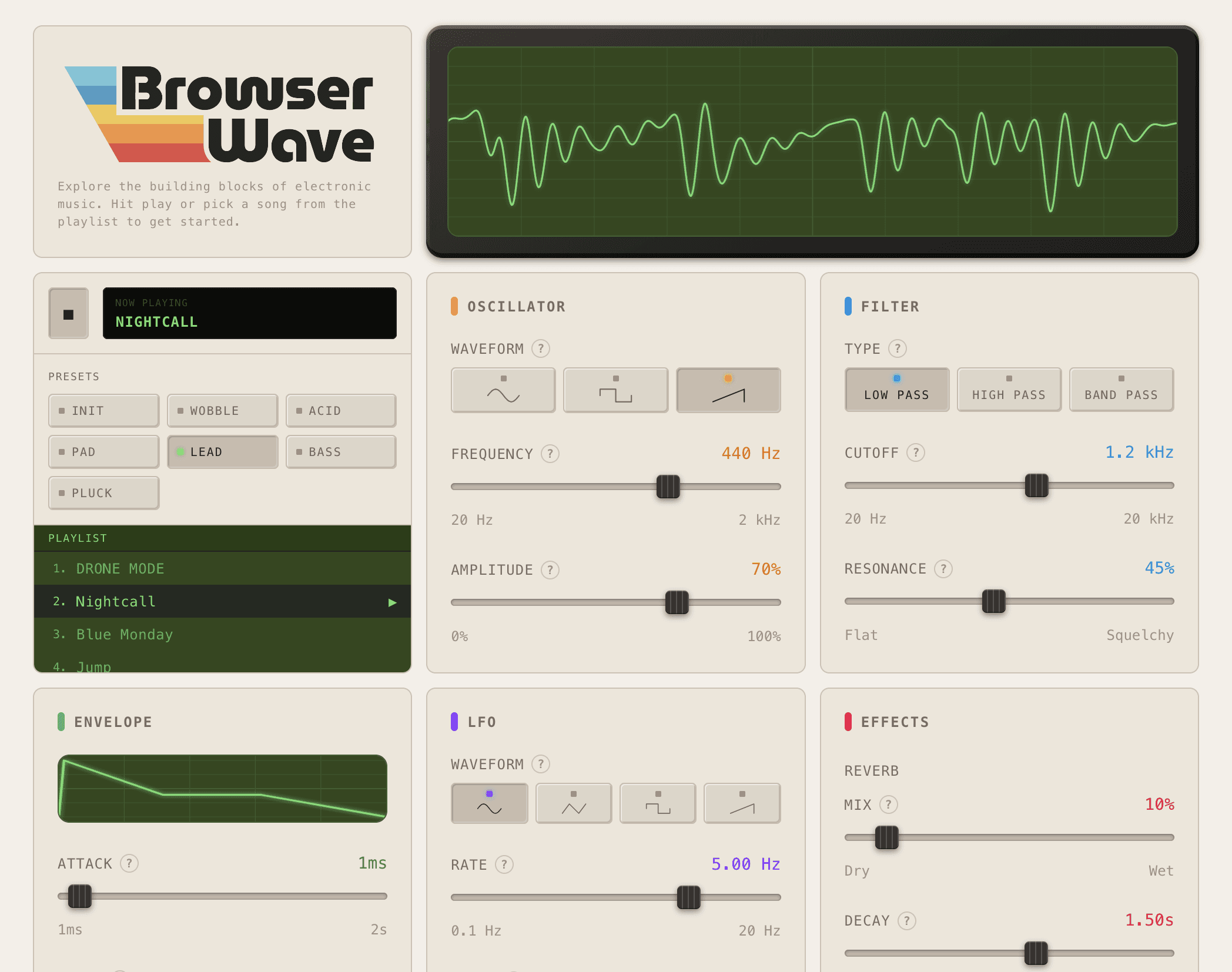
A browser-based analog synthesizer that lets anyone explore how electronic music is made. Twist knobs, play iconic riffs from Kavinsky to Kanye, and hear how waveforms, filters, and effects shape sound - no experience needed.
Built a real-time audio engine with a full signal chain (oscillator → filter → … → limiter) using
Tone.js, with strict separation between audio logic and React UI via a customuseAudioEnginehookImplemented 7 looping note sequences with independent tempo control via
Tone.PartandTone.Transportsynced to a live Canvas-based oscilloscope running at 60fps
React
Vite
Tone.js
Web Audio API
Canvas API
Tailwind CSS
GitHub Pages
How safe is AI?
— Jan '26
DataViz that tracks vulnerabilities affecting AI as live bacterial colonies
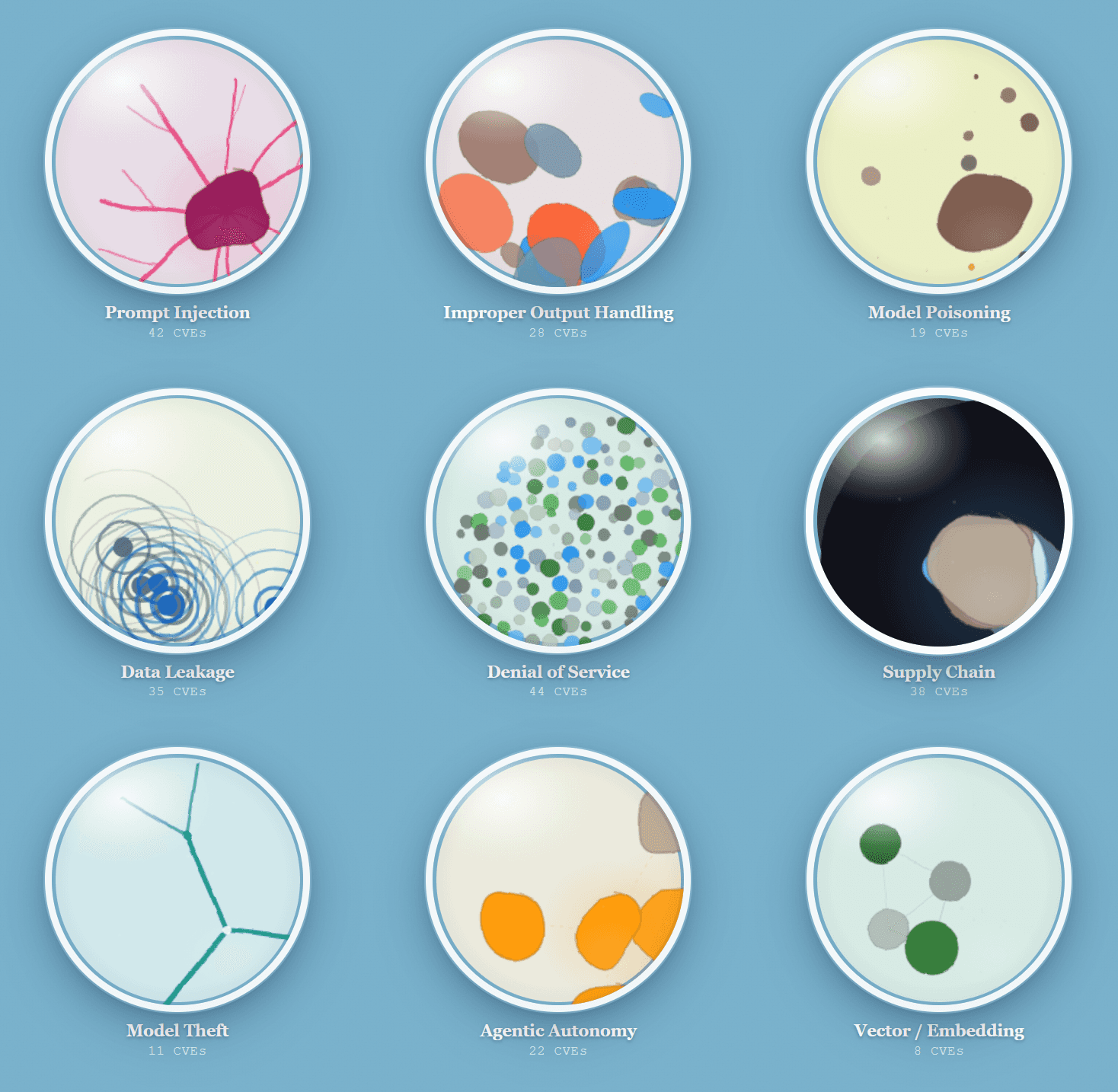
A daily-updated interactive visualization that maps real-world vulnerabilities affecting AI systems as living biological colonies growing inside petri dishes — each category of vulnerability rendered as a distinct organism morphology, driven entirely by live NVD and GitHub Advisory data. The more critical the vulnerability, the more the petri dish colony grows.
Canvas rendering pipeline for each petri dish, using
feTurbulencefor organic agar textures,feDisplacementMapfor colony edge distortion, and custom metaball algorithms for organism growth driven by real CVE severity and patch data.Daily Python data pipeline via GitHub Actions that fetches, categorizes and scores AI vulnerabilities across 9 threat categories using NVD API and GitHub Advisory DB
React
Vite
HTML5 Canvas
SVG filters
SVG Filters
GitHub Actions
GitHub Pages
Python
NVD API
Text scorch
— Mar '26
Feature demo for PreText - a new cutting edge text rendering framework for web

A magnifying glass that burns text off the screen. Hold it over a paragraph, watch sunlight scorch the paper, and see characters float away as glowing embers, while the remaining text reflows around the burn marks in real-time.
Built a real-time text-layout engine using
Pretext.jswithlayoutNextLine()computing variable line widths per frame around dynamic scorch exclusion zones without DOMImplemented a character-level particle system where burned glyphs detach seamlessly from the Pretext layout, spawn as ember particles with drift and tumble physics as they disappear to ash
Magnifying glass renders a frosted lens effect via Canvas
filtercompositing with focal point caustic animation driving the burn interaction
Pretext.js
Canvas 2D
TypeScript
Vite